
URA and HKBU Establish Strategic Collaboration Seeking to Promote Development of Northern Metropolis University Town
Following the signing of Memorandums of Understanding (MOU) with The Hong Kong University of Science and Technology in June, and with City University of Hong Kong on Tuesday, 19 August 2025, the Urban Renewal Authority (URA) today (25 August 2025) established a strategic collaboration with The Hong Kong Baptist University (HKBU) on the Kwun Tong Town Centre 2.0 project (KTTC 2.0, or the Project).
In just over two months, the URA has formed cooperation frameworks with three local universities to optimise the spatial utilisation of KTTC 2.0, underscoring the recognition by Hong Kong's higher education sector of the Project’s development potential. It also highlights how the Project expands and elevates the benefits of urban renewal from the neighbourhood district level to the sphere of knowledge-based innovation.
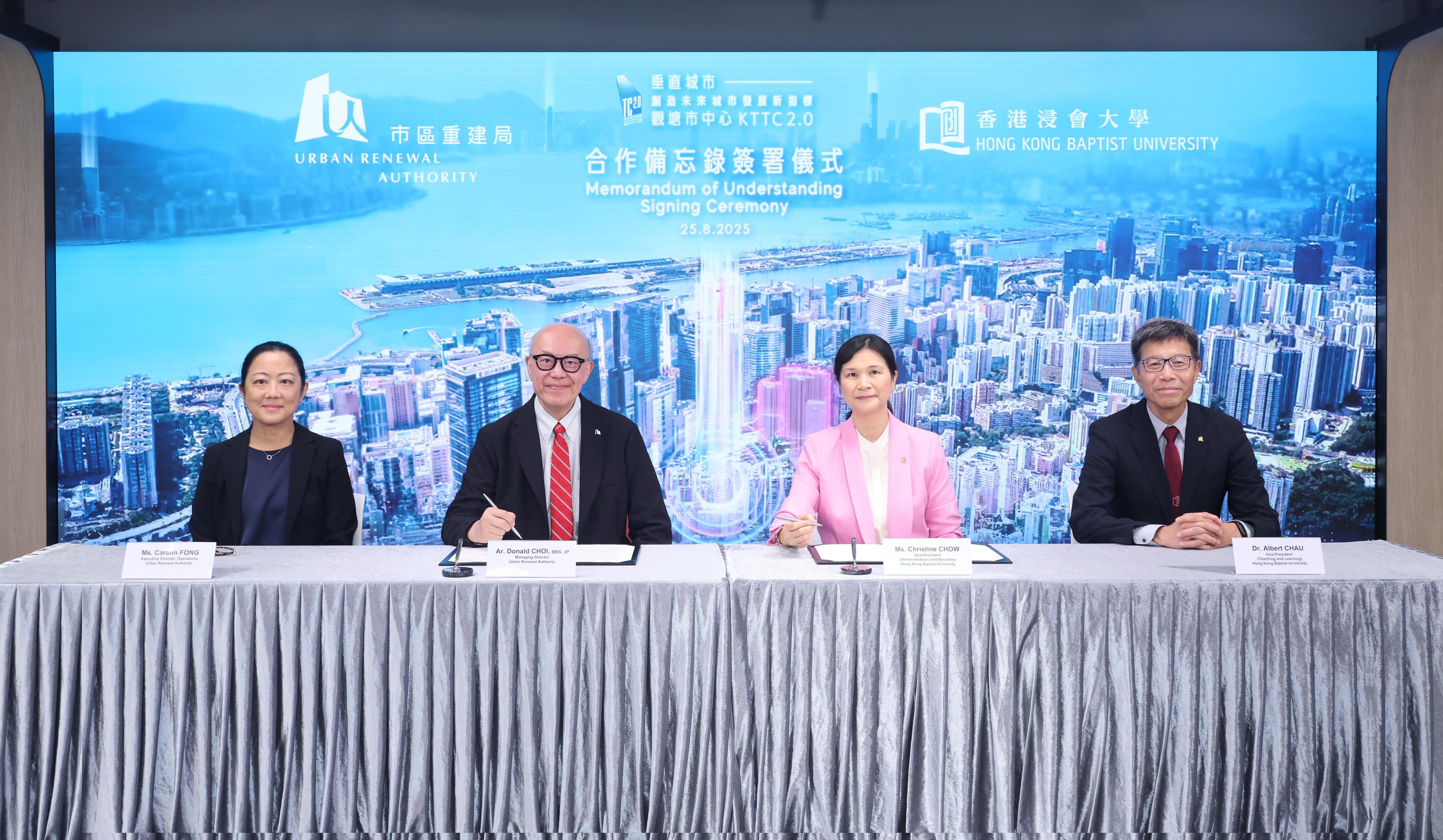
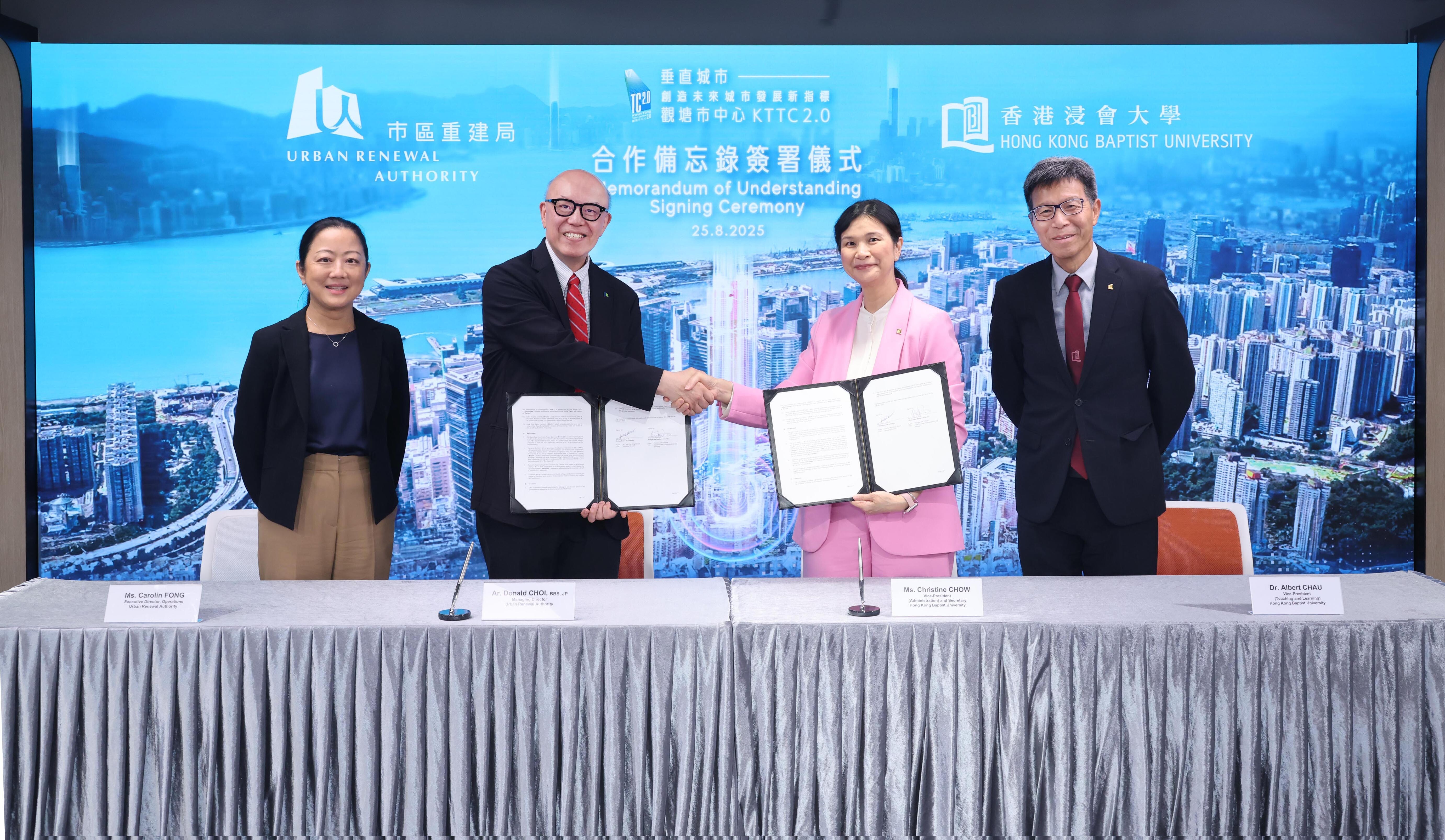
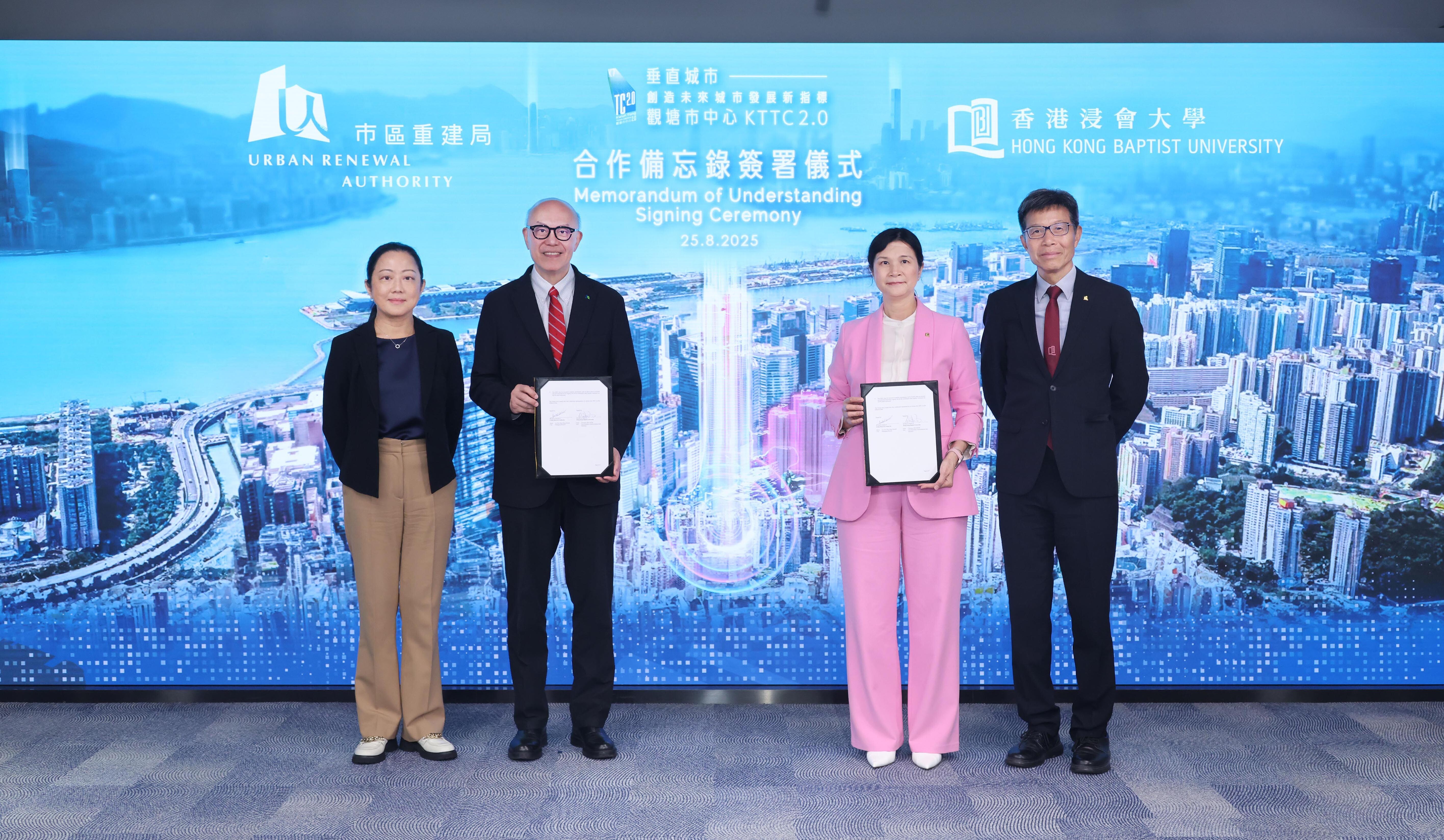
The MOU was signed by Managing Director of URA, Ar Donald Choi, and Vice-President (Administration) and Secretary of HKBU, Christine Chow. Under the cooperative framework, HKBU intends to explore the use of certain non-domestic portion of the Project, upon completion, to establish additional off-campus facilitates for teaching, learning, research, and other purposes. The URA will provide full support to HKBU to leverage the strengths of the Project and to achieve the development goals of both parties.
Ar Donald Choi remarked, “KTTC 2.0 offers three key strengths: high footfall and efficient logistics, good accessibility and connectivity, and flexible planning and design. With the signing of the MOU with HKBU today, the Project has received recognition from three universities in just over two months, making it the single development project with the highest level of participation from higher education institutions to date. It is anticipated that these collaborations will bring about positive impacts that further promote the development of the Northern Metropolis University Town.”
Ms Christine Chow stated, “As Hong Kong's second core business district, Kowloon East holds enormous development potential. The URA’s Kwun Tong Town Centre 2.0 project, which incorporates teaching and research elements, offers us a new option for our future planning. HKBU hopes to explore with the URA the opportunity to establish various types of facilities within this ‘vertical city’ upon its completion. This can help address HKBU’s long-term development needs and support the HKSAR Government’s efforts to develop Hong Kong into an international hub for higher education.”
Located at the core business district (CBD) on the Eastern side of Hong Kong, KTTC 2.0 will emerge as the city’s first high-density composite development embracing the “Vertical City” concept, integrating multiple functions including commercial, residential, trading, tourism, education, and research. The Project is set to support Hong Kong’s long-term development goals, including the development of Hong Kong’s second core business district (CBD2) on the Eastern side of Hong Kong and enhancing the accessibility and functional diversity of the development of a world-class Victoria Cove Area.
The URA strives to attract a diverse array of industries to the Project in the future, enhancing its major functions of “reinforcing”, “regenerating” and “reinventing”, with the goal of creating Hong Kong’s first “Vertical City” as the future town centre.
(ENDS)